
Winter is no reason to put off city walks.
We’ve put together seven routes in Kyiv, Ternopil, Lviv, Dnipro, and Ivano-Frankivsk: embankments, parks, historic centers, and viewpoints you can visit in winter without spending extra.
A Festive Route Without Costs: A Walk Around the VDNG Grounds in Kyiv
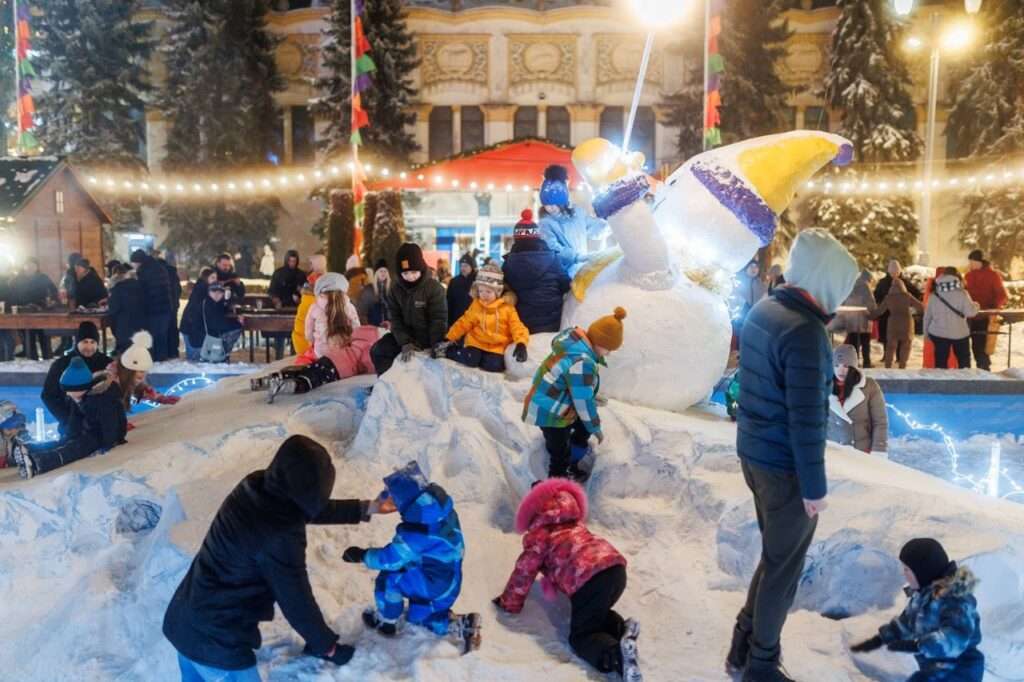
VDNG in winter is a route that doesn’t require a plan. Enter through the main gate and simply wander along the alleys: light installations, decorated pavilions, seasonal art objects, and photo zones create the feeling of a large winter town.
Even without an ice rink or attractions, it’s easy to spend an hour and a half to two hours here—walking, looking around, and soaking up the festive atmosphere. It’s especially nice to come after sunset: the lighting makes the space almost cinematic.
Why it’s worth going: lots of space, a festive mood, and no mandatory expenses.
Kyiv from Above and an Evening at a Museum: From Volodymyrska Hill to the Khanenko Museum
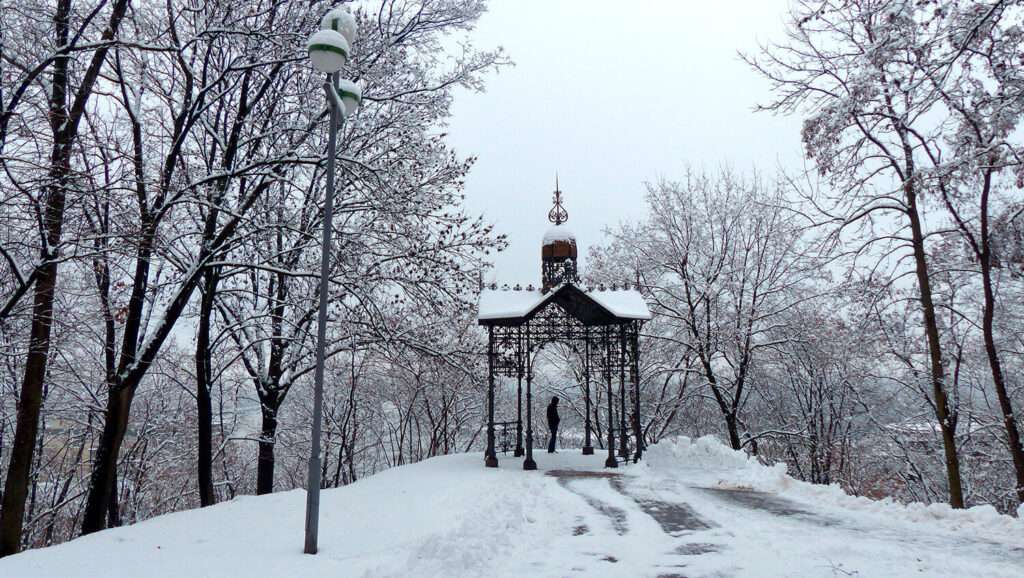
This route is for those who want to see Kyiv without haste and unnecessary noise. Start at Volodymyrska Hill: in winter, the panoramas here are especially striking—mist over the Dnipro, bridge silhouettes, and a sense of open space.
Next, you can descend toward Podil—on foot or by funicular—and reach Andriivskyi Descent. In the cold season it becomes less touristy and more intimate: cobblestones, street lamps, and historic buildings set a slow walking pace. From here it’s convenient to go up to Landscape Alley—minimalist, quiet, and photogenic in winter.
Then comes the city center and the Khanenko Museum. After a walk in the cold, this is a logical finish: warm historic interiors, quiet halls, and art from different eras. Moreover, the museum can be visited for free on the first Wednesday of every month, which fits perfectly into the format of budget-free walks.
Why it’s worth going: city panoramas and an introduction to history and culture in a single route.
In the Quiet of the Capital: Hryshko Botanical Garden
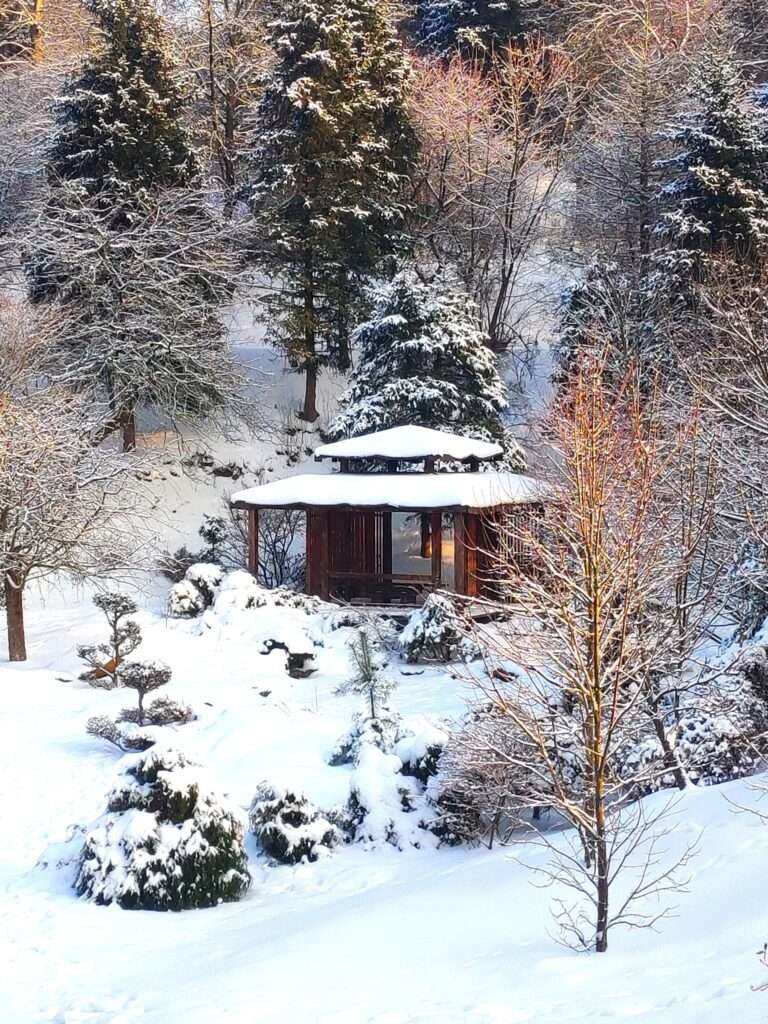
Choose this route if you want to slow down a bit. The best time for a walk in the botanical garden is morning or dawn, when Kyiv is still half-asleep.
In winter, the botanical garden is not about flowers, but about space. This is where some of the best winter views of the city open up: snow-covered alleys, hills, and the domes of the Vydubychi Monastery, clearly visible from the viewpoints.
The botanical garden always has its own rhythm: some people come to sled down hills, others walk their dogs, and some simply wander without a set route, stopping to admire the panorama.
Why it’s worth going: the feeling that you’ve briefly left the city while still staying in Kyiv.
Ternopil in Winter: A Snow-Covered City Center
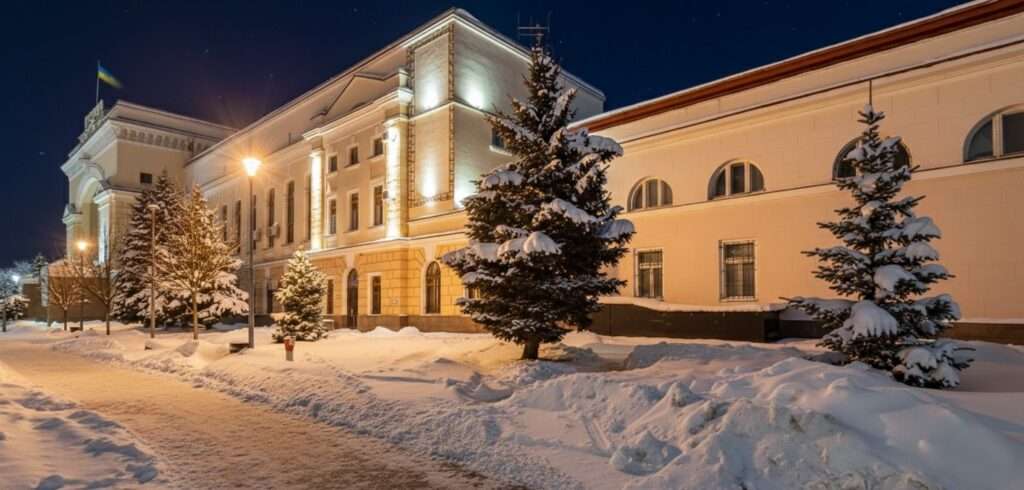
A walk around Ternopil is best started at the famous Ternopil Pond. In winter, it usually freezes and becomes one of the quietest places in the city. From the pond, a pedestrian bridge leads to Lovers’ Island—a small, cozy spot that is especially photogenic in winter.
Nearby stands Ternopil Castle—the oldest structure in the city and its main symbol. It was from the fortress on the shore of the reservoir that the history of Ternopil began.
From the castle, it’s convenient to move toward the center—to Theatre Square and Shevchenko Boulevard. In winter, a Christmas tree, festive lighting, and market stalls appear here, and the city feels compact and homey.
Right in the city center rises the Cathedral of the Immaculate Conception of the Blessed Virgin Mary—a true gem of late European Baroque that impresses with its grandeur. Nearby is Valova Street, one of the oldest pedestrian streets in Ternopil, with historic buildings and cozy cafés.
Why it’s worth going: everything is close and logical—from the pond and castle to the center with historic streets.
Lviv: Churches and Cathedrals in a Single Walk
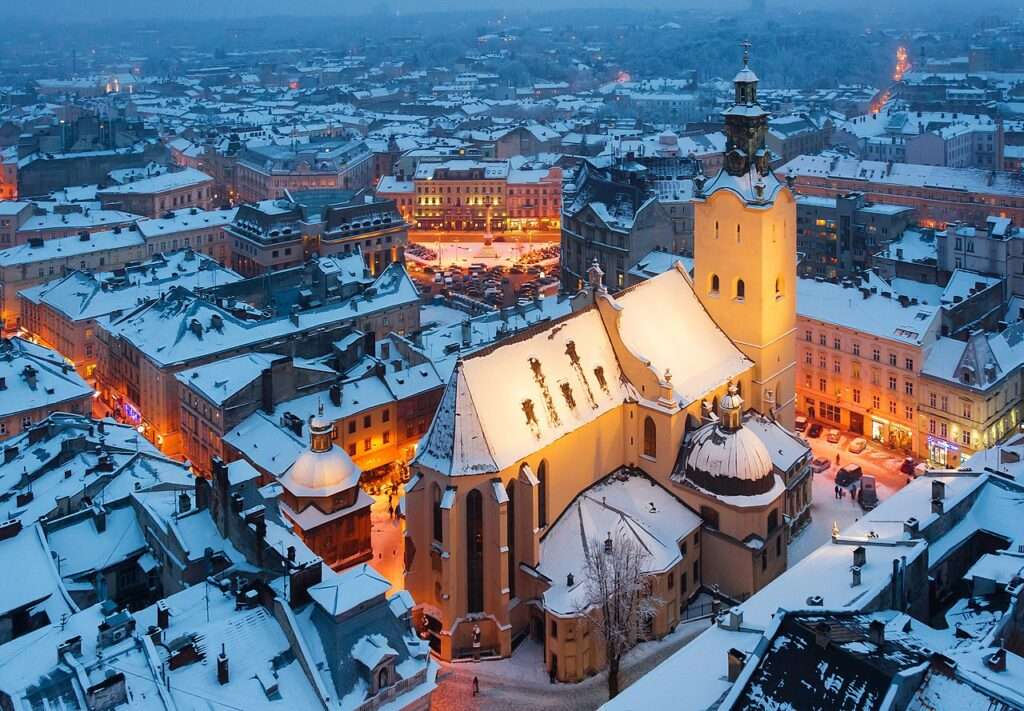
In Lviv, many churches and cathedrals are located close to each other, making them easy to combine into a walking route. Between the churches, the path leads through snow-covered streets of the historic center.
It makes sense to start with the Latin Cathedral on Cathedral Square. Construction of the church began in the 14th century, and over the following centuries it was modified and expanded with chapels. Today it is the cathedral of the Roman Catholic community of Lviv, featuring a Gothic interior, stained glass windows, and an organ.
Next is the Armenian Cathedral, one of the oldest churches in the city. It was built in the second half of the 14th century as the center of Lviv’s Armenian community. The cathedral is part of the historic city center ensemble listed as a UNESCO World Heritage Site and stands out for its blend of Armenian, Gothic, and later architectural elements.
The next stop on the route is the Garrison Church of Saints Peter and Paul. This former Jesuit church from the early 17th century is one of the first Baroque churches in Lviv. After a long period of closure, it reopened in 2011 and now serves as the garrison church.
The final point of the walk is the viewpoints near the memorial space of the Heroes of the Heavenly Hundred. From here, a panorama of central Lviv opens up.
Why it’s worth going: a compact walking route, historical landmarks from different eras, and free access to locations.
A Center Easy to Walk Through: A Winter Route Around Frankivsk
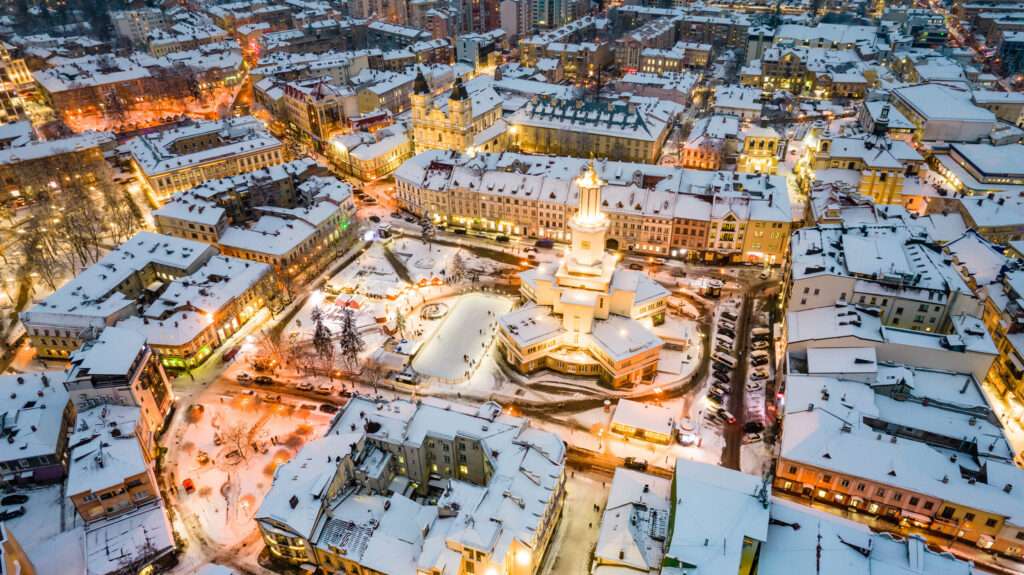
Ivano-Frankivsk is convenient for winter walks: the center is small, routes are clear, and interesting locations are literally one after another.
Start at Rynok Square and the Town Hall—the historical heart and main landmark of the city. In winter, it’s quieter here than during the tourist season, and the atmosphere of Frankivsk is especially noticeable: intimate, human-scale, and slightly “fairytale-like.”
Then head along Nezalezhnosti Street—the city’s main pedestrian artery. It’s long, flat, and comfortable for an unhurried walk. Along the way, you can stop by the Bastion—a part of Ivano-Frankivsk’s ancient fortifications, built in the 17th century to defend the city. The fortress played an important role in the region’s military history, becoming a symbol of resilience and strength. In the early 21st century, part of the fortifications was restored and turned into a cultural center.
We recommend finishing the route near the City Lake and Lovers’ Island. In winter, this area is less crowded: the alleys are emptier, and both locations become a true oasis of calm.
Why it’s worth going: short distances, a clear route logic, and the chance to end your walk without hustle—a rare combination for a city center.
Winter Dnipro: From the Embankment to Viewpoints
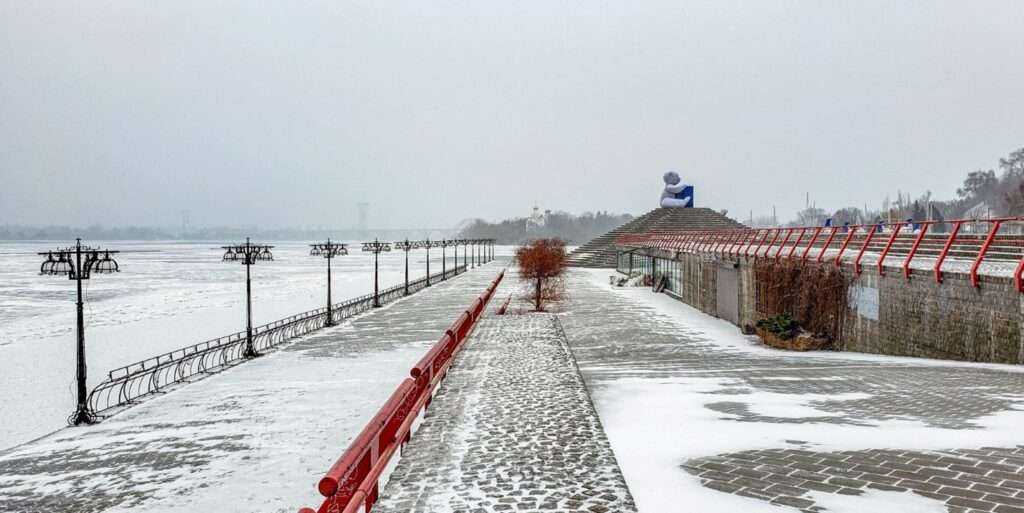
In Dnipro, winter walks naturally follow the river. There’s no need to invent complex routes—the city itself suggests the direction.
It’s best to start at the embankment. It stretches along the Dnipro for more than twenty kilometers and sets the scale of the entire city. This is exactly the place where you don’t want to rush—just walk along the frozen water and explore the surroundings.
Next, head to Taras Shevchenko Park—the oldest park in Dnipro, which from its founding until 1925 was known as Potemkin Garden. In winter, its alleys and slopes lead to viewpoints above the river, where the Dnipro can be seen from above.
From the park, a pedestrian bridge leads to Monastyrskyi Island—it is part of the park and offers panoramas of both riverbanks.
The final point of the walk can be near the Merefo-Kherson Bridge—an arched railway bridge from the early 20th century, listed in the register of architectural monuments of Ukraine. It’s easy to reach by returning along the embankment, without sharp changes to the route.
Why it’s worth going: this route doesn’t require planning—it forms naturally and lets you see Dnipro as it truly is.
If you’d like to continue your walks in the format of a full day in the capital—with museums, architecture, and tried-and-tested spots for coffee and a bite to eat—we recommend checking out the article “10 Ideas on How to Spend a Day in Kyiv on a Budget of Up to 1,000 Hryvnias.”